
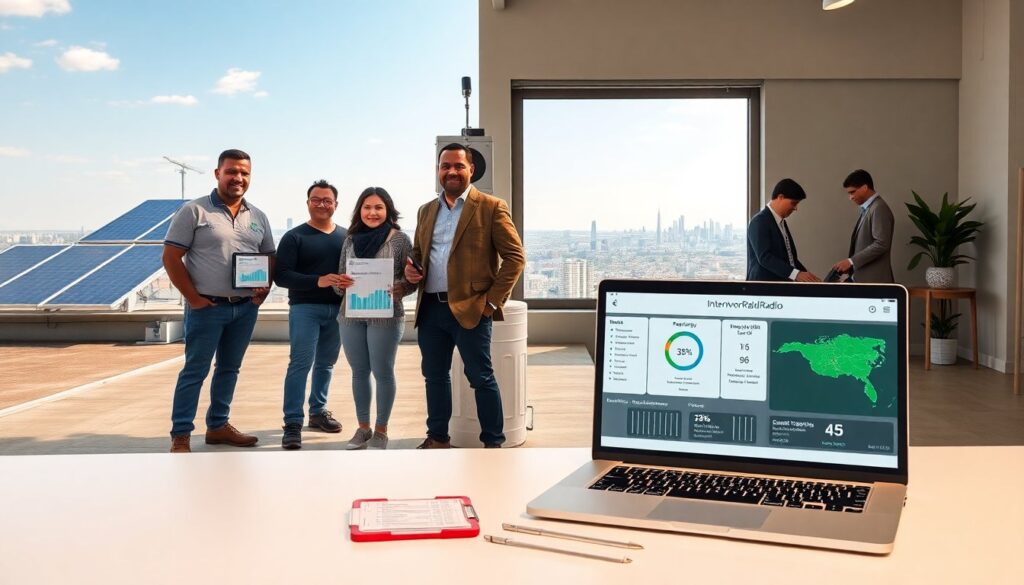
InterWorldRadio provides an update on its environmental work in 2026. The report lists actions, results, and ways the public can help. The update focuses on energy use, emissions, waste, and station-level changes. The organization sets clear priorities and measurable goals. The summary gives listeners and partners direct steps to support greener broadcasting.
Key Takeaways
- InterWorldRadio aims to reduce the carbon footprint of broadcasting with a 35% cut in direct emissions by 2028 through energy use tracking and transmitter upgrades.
- The network’s 2025–2026 initiatives include installing solar panels, upgrading transmitters, and conducting energy audits, reducing electricity use by 12% across affiliates.
- Partner collaborations provide grants, low-interest loans, and training to help stations adopt energy-saving practices and improve sustainable broadcasting.
- InterWorldRadio reports significant reductions in studio plastic waste and promotes hardware recycling with planned e-waste events to enhance environmental impact.
- Listeners and stations can actively support by choosing greener listening options, applying for grants, adjusting broadcast schedules, and volunteering for community sustainability efforts.
What InterWorldRadio Is Doing Today: Mission, Scope, And Environmental Priorities
InterWorldRadio states its mission as reducing the carbon footprint of community and shortwave broadcasting. The group tracks energy use at transmission sites and mixing studios. It sets targets for a 35% reduction in direct emissions by 2028. InterWorldRadio funds roof solar installations for partner stations and upgrades transmitters to high-efficiency models. The network prioritizes site energy, transmitter efficiency, and supply-chain impacts. The team publishes annual metrics and updates to hold itself accountable. The organization helps small stations access grants and bulk procurement to lower costs and emissions. InterWorldRadio also trains engineers on energy-saving operational practices and schedules.
Recent Projects And Program Highlights
InterWorldRadio launched three main programs in 2025 and expanded them in 2026. The first program installs solar panels at affiliate sites in Latin America and East Africa. The second program replaces aging transmitters with models that use less power while maintaining coverage. The third program pays for energy audits and low-cost retrofits at community stations. InterWorldRadio reports that early adopters cut annual electricity consumption by 18% on average. The group also started a pilot for shared cloud playout, which reduces local hardware needs and lowers energy use across small stations.
Key Partnerships, Funding, And Community Outreach
InterWorldRadio partners with regional public broadcasters and environmental NGOs to fund projects. The group secures matching grants and arranges low-interest loans for station upgrades. Local communities donate labor and materials for roof installs. InterWorldRadio runs workshops that teach station staff how to monitor energy data and how to schedule broadcasts to avoid peak grid demand. The network also helps stations list live streams on major platforms so they keep audiences while they reduce transmitter hours. Many partners already list streams alongside big broadcasters, and live-stream examples follow industry standards such as those used by national sports radio providers like the live ESPN radio feeds.
Measuring Impact: Emissions, Energy Use, And Sustainable Broadcasting
InterWorldRadio uses three metrics to measure progress: scope 1 direct emissions, site electricity use, and transmitter energy efficiency. The team collects monthly meter reads from participating stations. The group converts electricity use to CO2 equivalents using local grid factors. InterWorldRadio reports a 12% reduction in aggregate electricity use across affiliates in 2026 compared to 2024. The group credits solar generation, equipment swaps, and operational scheduling. InterWorldRadio also models avoided emissions when stations shift hours or move audiences to lower-energy streaming. The network posts data tables and year-over-year charts to support transparency and invite peer review.
Biodiversity, Plastic Reduction, And Waste Management Results
InterWorldRadio tracks non-energy impacts too. The organization reduced single-use plastics in station studios by replacing bottles and packaging. Partner sites now use reusable kits for field reporting. The group audits hardware disposal and sets standards for recycling circuit boards and transmitters. InterWorldRadio also coordinates with local conservation groups when it installs ground-mounted solar to avoid sensitive habitats. Early reports show a 45% drop in studio plastic waste where the program ran. The network plans formal e-waste take-back events in 2027 to improve hardware recycling rates.
How Listeners And Local Stations Can Get Involved
Listeners can support InterWorldRadio by choosing greener listening options and by donating to specific station projects. They can switch to low-power streaming or download shows for offline listening. Local stations can apply for small grants and request an energy audit. Stations can change scheduling to reduce peak-hour broadcasting and can install simple timers and smart plugs to cut idle power. Volunteers can help with community installs and with fund drives that cover hardware costs. InterWorldRadio provides step-by-step guides and templates for grant applications, and it connects stations to bulk procurement groups to lower equipment prices.