

Quick Answer
For most rural Alberta homes, Starlink is worth it only when no fixed wireless or fibre reaches your address. If a local tower covers your property, fixed wireless usually costs less, uses less power, and performs just as well for everyday use. Starlink shines in truly remote spots — far from towers, off-grid, or surrounded by open prairie — where it may be your one reliable path to fast, low-lag internet.
Introduction
At a farmhouse north of Red Deer, the video call freezes every time someone in the next room loads a webpage. That kind of daily headache is why so many rural Albertans are shopping for something better right now.
The two names that come up most are Starlink and fixed wireless. Both promise a way out of slow, dated connections, but they work in completely different ways and suit different properties. Before committing, many households compare plans through a local Starlink Alberta specialist, since the right fit often depends on your exact location. What works for a neighbour a concession road over may not work for you.
This guide breaks down how the two stack up on speed, cost, reliability, and reach — so you can pick with confidence rather than guesswork.
Speed, Cost, and Coverage: How the Two Rural Options Stack Up
The right choice comes down to how each technology reaches your home and what that means day to day. Starlink beams data from low-orbit satellites to a dish on your roof or yard. Fixed wireless sends a radio signal from a nearby tower to an antenna on your property. That one difference shapes everything else: cost, speed, reliability, and whether the service can even reach you.
Real-World Speed and Latency
Both options carry enough speed for streaming, video calls, and remote work, but they behave differently depending on where you sit.
- Starlink usually runs 100–200 Mbps in rural areas, and it often performs better the farther you get from crowded networks.
- Fixed wireless can match or beat that near a tower, though speeds fall off as your distance from the tower grows.
- For gaming and calls, both keep lag low enough for smooth use, with fixed wireless holding a slight edge when the tower is close.
What Each One Costs Over Time
Upfront and monthly numbers matter, especially on a fixed household budget.
|
Factor |
Starlink |
Fixed Wireless |
|
Equipment |
One-time dish purchase |
Often included or low-cost |
|
Monthly price |
Mid to higher range |
Usually lower |
|
Data caps |
Unlimited on most plans |
Often unlimited locally |
|
Contracts |
No lock-in |
Varies by provider |
Fixed wireless generally wins on price when a tower serves your area. A property with strong tower coverage can save several hundred dollars a year over satellite.
Power Draw and Weather Reliability
Here’s where a lot of buyers get caught off guard. A fixed wireless router sips power, often 5 to 15 watts, which makes it the practical pick for off-grid or solar setups. A satellite dish pulls a good deal more, and that adds up fast if you run on batteries.
Weather plays a part too. Heavy snow or thick cloud can briefly interrupt a satellite signal, while fixed wireless leans on a steady ground link. That said, satellite internet Alberta users out on open land rarely deal with the tree cover or valleys that block a clear view of the sky.
Which One Can Actually Reach You
For many properties, reach settles the argument. Fixed wireless only works if a tower covers your address, and that coverage thins out quickly across low-density stretches of the province. Starlink reaches almost anywhere with an open view overhead, which is exactly why it became the go-to for the most isolated farms and cabins.
Once you know which technology can physically serve your land, the next step is matching a plan to how your household actually uses the internet.
Choosing the Right Rural Internet Plan for Your Property
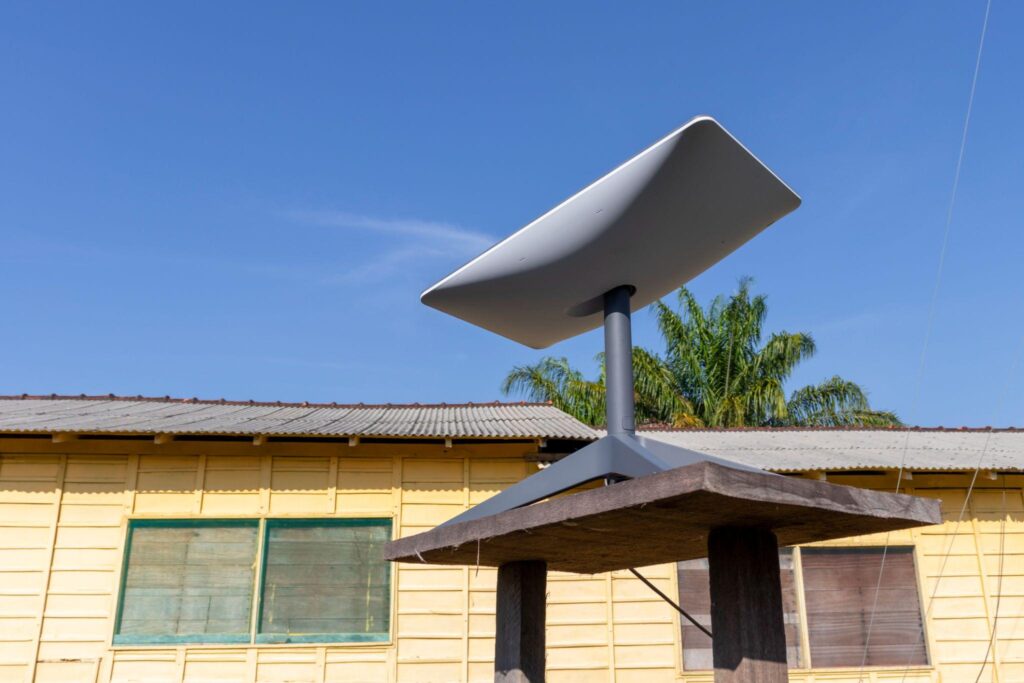
Knowing how each option works is one thing. Picking the one that fits your land and your habits is another. A few honest questions about your address and usage will get you there faster than any spec sheet.
Start With Your Postal Code
Coverage varies road by road in rural Alberta, so your exact location decides more than any advertised speed.
- Check whether a fixed wireless tower serves your address before anything else.
- If a tower reaches you with a strong signal, start there. It usually costs less and runs on less power.
- If coverage is weak, spotty, or absent, satellite becomes the realistic path.
- Confirm availability straight with a provider, since maps often look rosier than real-world results.
Match the Tech to How You Live
The best technology on paper can still be the wrong fit for your home. So is Starlink worth it? The answer comes down to a handful of everyday realities.
|
Your Situation |
Better Fit |
|
Strong tower nearby, grid power |
Fixed wireless |
|
Off-grid or solar-powered home |
Fixed wireless |
|
Remote farm, no tower in range |
Starlink |
|
Open sky, heavy data use |
Starlink |
|
Tight monthly budget, tower access |
Fixed wireless |
Keep Your Options Open
Rural connectivity is shifting quickly, and Alberta has committed major funding to expand rural broadband over the next few years. A tower might reach your road next season, or a fibre project could change the math entirely. Picking a service without a long contract keeps you flexible as the ground under these decisions keeps moving.
Weigh coverage, power, and cost against your real needs, and a confusing choice turns into a clear one.
Making the Call for Your Rural Alberta Home
There’s no single winner here, only the right fit for your property. If a fixed wireless tower reaches your address with a strong signal, it’s usually the better call: it costs less, draws less power, and handles everyday streaming, calls, and remote work without complaint. Save satellite for the places towers can’t touch, where an open sky and true reach make it the dependable connection it was built to be.
The takeaways are simple. Check coverage at your exact address first. Weigh the choice against how your household really uses the internet. And skip long contracts while rural options keep expanding. Get those three right, and you’ll land on a connection that keeps your home online for years.