
The romanticized version of travel involves getting lost in narrow alleyways, discovering hidden cafes, and letting serendipity guide your itinerary. The reality involves Google Maps, translation apps, ride-hailing services, and the constant, nagging anxiety of whether your phone will have signal when you need it most. Connectivity is no longer a luxury—it is a functional prerequisite for modern travel. And yet, the options available to travelers remain stubbornly fragmented. You can pay your home carrier’s extortionate roaming rates, hunt for local SIM cards in each destination, or navigate the increasingly crowded eSIM market, where every provider claims to offer the fastest speeds and the broadest coverage. Iroamly esim takes a different approach: instead of trying to be everything to everyone, it focuses on three core pillars—plan flexibility, unrestricted hotspot sharing, and a free trial that removes the risk of buyer’s remorse. After testing the service across multiple destinations spanning three continents, what emerged was a picture of a service that understands the actual rhythms of travel better than most of its competitors.
The Fragmentation Problem That eSIM Was Supposed to Solve
The promise of eSIM technology was always about unification: one digital SIM that works everywhere, eliminating the need to juggle physical cards across borders. But the reality has been more complicated. Different providers offer different coverage maps. Some work well in Europe but fail in Asia. Others have great coverage in North America but spotty performance in South America. The fragmentation problem that eSIM was supposed to solve has simply migrated from physical SIMs to digital ones.
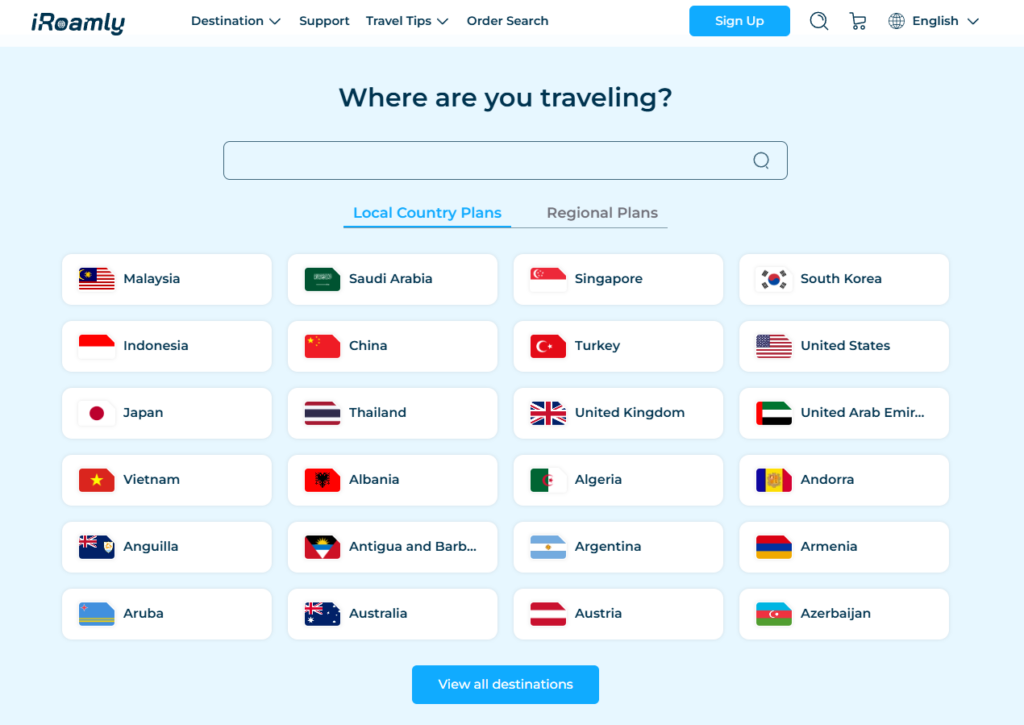
iRoamly addresses this by partnering with over 50 telecom operators globally, ensuring coverage in more than 150 countries. The company claims strong signal and high-speed data in 99% of covered countries. This is a bold claim, and in practice, the performance varies by region—as it does with any reseller model—but the breadth of the partner network means that travelers are less likely to find themselves in a coverage dead zone. The service offers regional plans that cover entire continents, as well as country-specific plans for travelers who only need connectivity in a single destination.
The Plan Architecture: Why Three Options Matter More Than You Think
The most common mistake travelers make when buying an eSIM is choosing the wrong plan type. Daily plans are great for short trips but wasteful for longer journeys. Total plans offer flexibility but require you to monitor your usage. Unlimited plans provide peace of mind but come at a premium. Most eSIM providers force you into one of these categories, leaving you to make a choice that may not align with your actual travel patterns.
Daily Plans: Predictable Data for Short Trips
The City Break Scenario
Daily plans reset each morning, providing a fixed amount of data that refreshes every 24 hours. This structure works well for short city breaks where usage patterns are predictable—think three days in Istanbul with heavy map navigation, moderate social media, and occasional video calls. The predictability removes the anxiety of watching a total data bucket dwindle, and the daily reset means you never run out mid-day. For travelers who know exactly how much data they will use each day, this is the most cost-effective option.
Total Plans: A Single Bucket for Flexible Itineraries
The Multi-City Road Trip
Total plans provide a fixed data allowance that you can draw down at your own pace across multiple destinations. This is particularly useful for travelers moving between countries with different network infrastructures—the eSIM connects to the best available local network in each location, and you do not need to purchase a new plan at each border. The total data bucket does not reset daily, which means you can use more on heavy days and less on light days without wasting unused data. For week-long itineraries across multiple Turkish regions, for example, where data consumption fluctuates day to day, this structure offers the most flexibility.
Unlimited Plans: No Usage Anxiety
The Remote Worker’s Choice
Unlimited plans eliminate the mental overhead of monitoring usage counters. For travelers who rely on their phone for work—video calls, file uploads, cloud synchronization—the ability to use data without constantly checking the remaining balance has genuine value. The service does not impose sudden throttling on unlimited plans, which is a meaningful differentiator from competitors that reduce speeds after a few gigabytes. However, the unlimited option is priced at a premium, and it is only worth the investment if you actually need the capacity.
The Installation Flow: A Three-Act Structure That Works
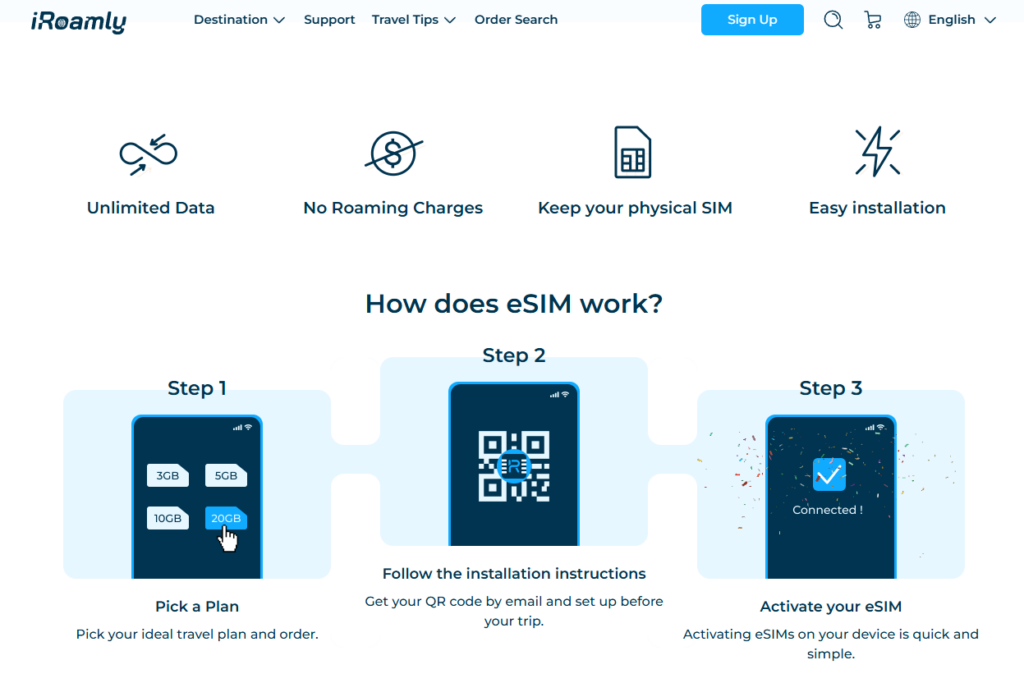
The installation process follows a logical sequence that, in practice, proved remarkably frictionless—provided you respect the installation window. The service recommends installing the eSIM one to two days before departure, using a stable Wi-Fi connection. This is not arbitrary advice; installing an eSIM requires an active internet connection, and doing it in a hotel room or at home is far more reliable than attempting it in an airport terminal with spotty public Wi-Fi.
Step One: Purchase and QR Code Delivery
The Email That Arrives Within Minutes
After purchase, the eSIM arrives as a QR code sent to your email address. The delivery is nearly instant, which means you can complete the entire purchase-to-installation flow in a single session if you choose. The QR code is accompanied by an activation code, providing a backup method if the QR scan fails for any reason. The installation requires an internet connection, and the recommendation is to use a fast Wi-Fi network to avoid any interruptions during the setup.
Step Two: Scanning and Installing the Profile
The Thirty-Second Setup
The installation itself follows the standard eSIM provisioning flow: open your phone’s cellular settings, select “Add Cellular Plan,” and scan the QR code with your camera. In practice, the QR code scan takes under thirty seconds on a modern smartphone. The eSIM profile installs without errors, and the device recognizes it immediately. The installation guide is refreshingly direct—no dense technical jargon, no confusing multi-step workflows that require you to toggle between different settings panels.
Step Three: Activating Upon Arrival
The Moment the Connection Establishes
The final step is the actual activation. Once you land at your destination, you enable the eSIM profile in your device settings and turn on data roaming for that line. The connection typically establishes within minutes. There is no need to remove your primary physical SIM, which means you can keep your home number active for calls and texts while using the eSIM exclusively for data. This dual-SIM capability is one of the genuine conveniences of the technology—you are not forced to choose between staying reachable on your regular number and having affordable data abroad.
The Free Trial: A Risk-Free Entry Point
One of the more compelling aspects of the service is the free 500MB trial eSIM available in over 100 countries. The trial lasts one day and requires no credit card upfront. This is not a promotional gimmick that requires you to enter payment details and remember to cancel—it is genuinely free for first-time users. The value here is twofold. First, it allows you to test the installation flow without financial commitment, which is particularly useful for travelers who are new to eSIM technology and want to confirm that their device is compatible. Second, it lets you evaluate network performance in your specific destination before purchasing a paid plan.
In practice, the 500MB allocation is enough to test the basics—checking maps, sending a few messages, loading a website—but not sufficient for any serious data usage. Think of it as a proof-of-concept rather than a meaningful data allowance. The trial is limited to one per user, which is standard for this type of offering, and it is available in destinations ranging from Turkey to Japan to the United States.
A Practical Comparison: How the Service Stacks Up
To ground the discussion in something more concrete than feature lists, here is a comparison of how the service measures against the broader eSIM landscape across several dimensions that actually affect the travel experience.
|
Dimension |
iRoamly |
Typical eSIM Alternatives |
|
Plan Variety |
Daily, Total, and Unlimited |
Usually limited to one or two structures |
|
Hotspot Policy |
Unrestricted sharing on all paid plans |
Often restricted or throttled |
|
Speed Guarantee |
No sudden throttling on unlimited |
Speed reductions after daily caps common |
|
Trial Offering |
500MB free in 100+ countries |
Limited or no trial available |
|
Coverage Breadth |
150+ countries, 50+ partners |
Varies widely by provider |
|
Installation Complexity |
Three-step QR code flow |
Varies; some require app downloads |
The Scenarios Where the Service Delivers
The service is not a one-size-fits-all solution, and its performance varies depending on the travel context. The following scenarios illustrate where the service excels.
Solo travelers on short trips benefit from the Daily plans, which provide predictable, per-day data without the risk of running out mid-day. The installation is quick, the activation is smooth, and the coverage is sufficient for most urban destinations.
Digital nomads on extended journeys benefit from the Total plans, which provide a single data allowance that can be drawn down over weeks or months. The ability to keep the same eSIM active across multiple countries without purchasing new packages at each destination reduces both cost and administrative overhead.
Families or small groups can take advantage of the unlimited hotspot sharing. One paid eSIM can provide connectivity for multiple devices, which is significantly more economical than purchasing individual plans for every traveler. The unrestricted hotspot policy means you are not limited to sharing with just one device.
First-time eSIM users have a genuine on-ramp through the free 500MB trial. Testing the installation flow and network performance before committing any money removes a significant barrier to adoption.
Realistic Limitations and Considerations
No service is without its constraints, and iRoamly is no exception. The company itself acknowledges that it does not guarantee uninterrupted service, timely delivery, or a fault-free experience. This is standard language for any telecom reseller, but it is worth keeping in mind: the service depends on partner networks, and those networks have their own reliability characteristics that vary by country and region.
Device compatibility is another factor. The customer is responsible for ensuring their phone is eSIM-compatible and network-unlocked. The compatibility list provided at checkout is not exhaustive, which means some newer devices may work even if they are not explicitly listed, but there is also a chance that an older or carrier-locked phone will not function at all. Checking compatibility before purchase is essential.
There is also a regulatory nuance that affects travelers to certain destinations. In Turkey, for example, all travel eSIMs must be installed before arriving in the country in order to activate properly. If the eSIM is installed after arrival, activation may fail unless a VPN is used and location services are disabled. This is a policy restriction rather than a technical defect of the eSIM itself, but it is a detail that can catch travelers off guard if they are not aware of it in advance.
The Verdict: A Service That Respects the Traveler’s Time
After walking through the installation flow, examining the plan structures, and considering the real-world feedback, the service emerges as a competent player in a crowded field. It does not reinvent the eSIM category, but it refines several aspects that matter: plan flexibility, the inclusion of a free trial, unrestricted hotspot sharing, and a straightforward three-step setup.
The most compelling use case is probably the traveler who values options. If you want the freedom to choose between daily, total, or unlimited data; if you appreciate having a free trial to test the waters; and if you plan to share your connection with other devices, then turkey esim and the broader service lineup offer a credible solution. The referral program adds a mild incentive to spread the word, and the coverage footprint covers most major travel destinations.
For the traveler who wants to land, turn on their phone, and start navigating without hunting for a SIM card, the service delivers on that promise. The installation is quick, the plans are reasonably priced, and the flexibility across plan types accommodates a wide range of travel styles. It is not the cheapest option in every market, and it is not the most feature-rich, but it strikes a practical balance that will work for a broad cross-section of travelers.