
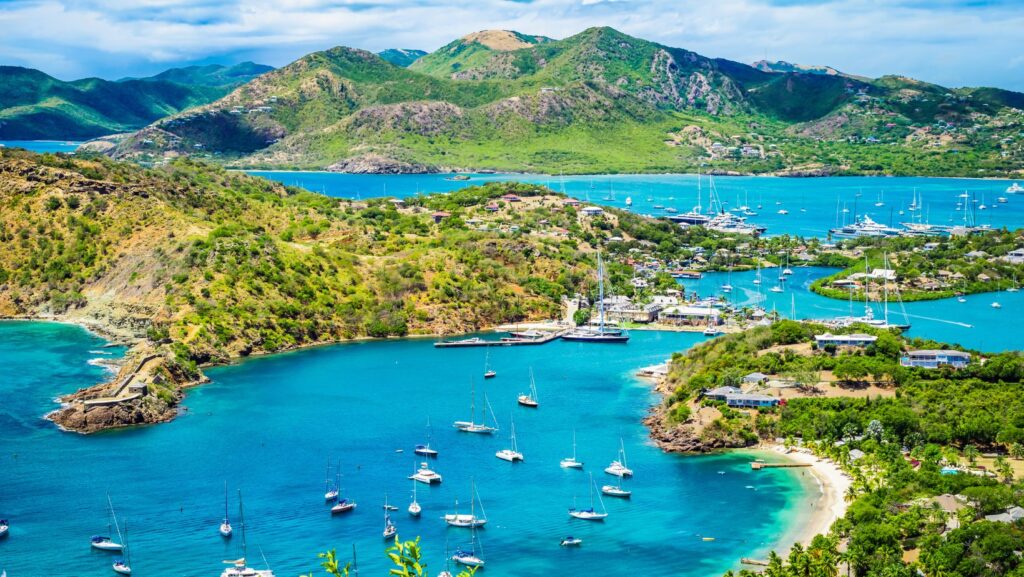
Caribbean history is often reduced to a handful of simplified images: palm trees and plantations, slavery followed by emancipation, colonial rule followed by independence. While none of these elements are false, they represent only fragments of a much larger, more complex historical reality.
Despite decades of scholarship, activism, and cultural production, Caribbean history remains widely misunderstood — both outside the region and, at times, within it. This misunderstanding is not accidental. It is the result of structural omissions, colonial legacies, and persistent global narratives that marginalize Caribbean voices.
To understand why this history is still misread, we must examine how it has been told, who has told it, and whose perspectives have been systematically excluded.
Colonial Narratives Still Shape Historical Memory
History Was Written to Serve Empire
For centuries, Caribbean history was written primarily by colonial administrators, European historians, and imperial institutions. Their goal was not understanding, but justification.
Colonial narratives emphasized:
- European “discovery” and expansion
- Economic productivity of plantations
- Administrative achievements of empire
At the same time, they minimized or erased:
- Indigenous civilizations
- Enslaved Africans’ resistance
- Maroon communities
- Intellectual and political agency of colonized peoples
Expert insight:
“Colonial history did not simply omit Caribbean voices — it actively replaced them.”
— Postcolonial historian, University of the West Indies
These narratives became institutionalized through textbooks, archives, and global education systems.
Emancipation Without Context
Even when slavery is acknowledged, it is often framed narrowly:
- As a moral failure corrected by abolition
- As an economic system that simply “ended”
This framing ignores:
- Centuries of resistance before emancipation
- The economic devastation left behind
- The absence of reparations
- The continuity of racial hierarchies
Freedom did not equal equality — but that distinction is frequently lost.
The Caribbean Is Treated as a Single Story
Diversity Is Flattened
The Caribbean is one of the most diverse regions in the world, shaped by:
- Indigenous peoples
- African diasporas
- European colonization
- Indian, Chinese, and Middle Eastern indentureship
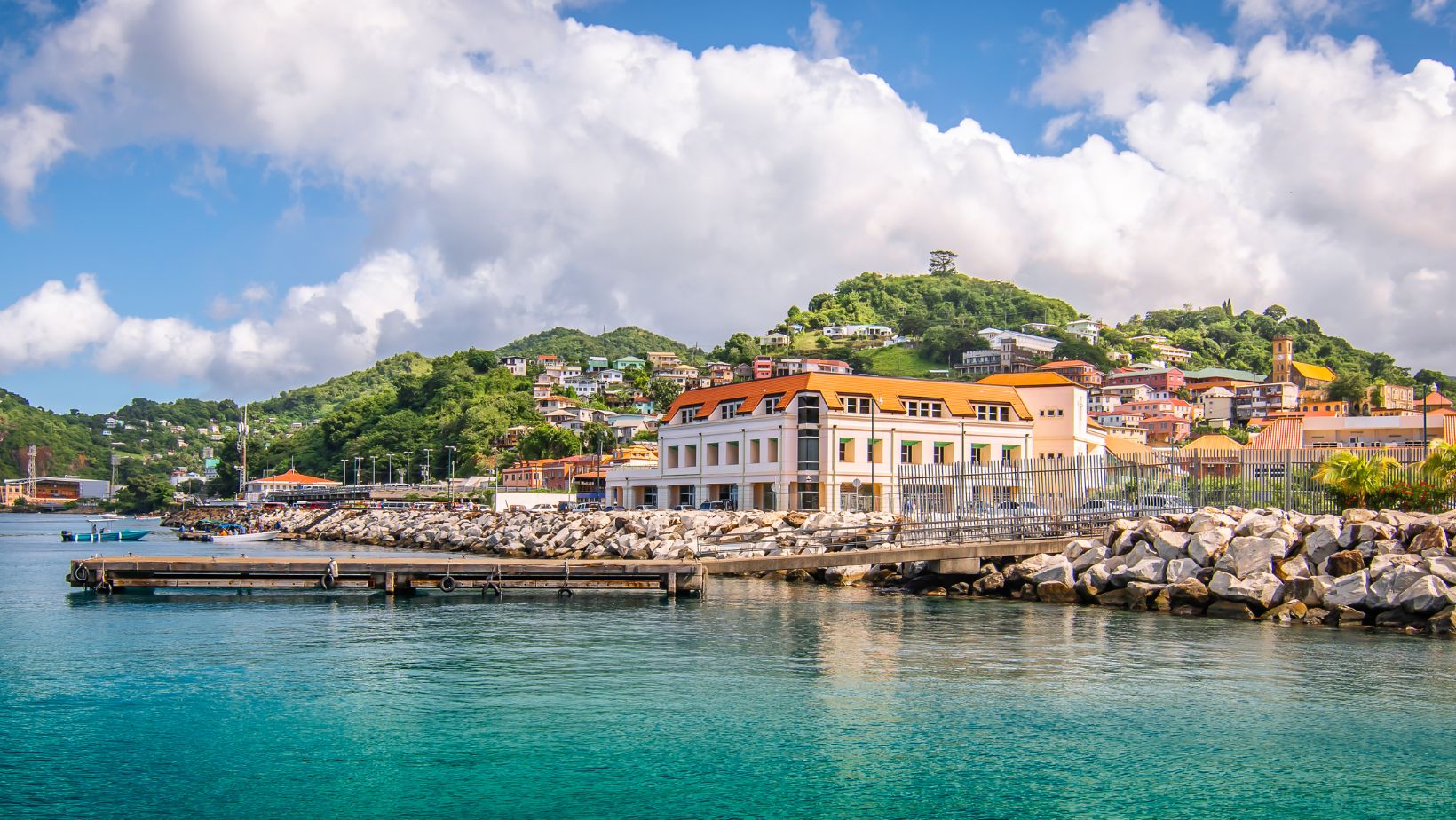
Yet global narratives often treat the Caribbean as culturally and historically uniform.
This erasure obscures:
- Linguistic differences (English, Spanish, French, Dutch, Creole languages)
- Distinct colonial systems
- Varied paths to independence
- Unique political trajectories
Expert insight:
“There is no single Caribbean history — only interconnected histories.”
— Caribbean sociologist
Regional Complexity Is Ignored
Haiti’s revolutionary history, Jamaica’s Maroon wars, Barbados’ plantation economy, Trinidad’s indentureship legacy, and Cuba’s revolutionary state are often lumped together or misunderstood in isolation.
Without context, these histories appear contradictory rather than interconnected.
Tourism Narratives Replace Historical Truth
Paradise Over Reality
Tourism has become one of the most powerful storytellers about the Caribbean — and one of the least accurate.
Tourism narratives emphasize:
- Leisure
- Escape
- Timelessness
They downplay:
- Colonial violence
- Economic dependency
- Labor exploitation
- Environmental vulnerability
When history is presented at all, it is often sanitized.
Culture Is Marketed, Not Explained
Music, food, festivals, and spirituality are celebrated — but disconnected from their historical roots in resistance, survival, and adaptation.
For readers seeking deeper context, museums, archives, and independent publications increasingly encourage audiences to check it out beyond official brochures and curated narratives, engaging directly with Caribbean scholars and community historians instead.
Understanding culture without history leads to appropriation, not appreciation.
Education Systems Outside the Region Are Incomplete
Caribbean History Is Marginalized Globally
In many countries, Caribbean history appears only as:
- A footnote in transatlantic slavery
- A peripheral case in colonial studies
Students rarely learn about:
- The Haitian Revolution’s global impact
- Caribbean contributions to political thought
- The region’s role in shaping modern capitalism
This absence reinforces the idea that the Caribbean is historically secondary — rather than central.
Even Within the Caribbean, Gaps Remain
Colonial curricula persisted long after independence. While reforms have occurred, challenges remain:
- Limited resources
- Exam-oriented teaching
- Underrepresentation of local historians
As a result, many Caribbean students graduate knowing more about European history than their own.
Caribbean Intellectual Traditions Are Overlooked
Thinkers From the Region Are Rarely Centered
Caribbean intellectuals have profoundly shaped global thought in:
- Marxism
- Black radical theory
- Feminism
- Cultural studies
- Postcolonial philosophy
Yet figures such as:
- C.L.R. James
- Sylvia Wynter
- Frantz Fanon
- Eric Williams
are often taught outside Caribbean history contexts — or not taught at all.
Expert insight:
“Caribbean thinkers are cited globally, but rarely recognized as products of Caribbean history.”
— Cultural theorist
This disconnect strips ideas from their historical origins.
Oral History Is Devalued
Much Caribbean history lives outside written archives — in:
- Oral traditions
- Music and storytelling
- Ritual and memory
Western historiography has long privileged written records, marginalizing these forms of knowledge.
As a result, entire historical experiences remain undocumented in “official” histories.
Race, Power, and Global Amnesia
Caribbean History Challenges Comfortable Myths
Understanding Caribbean history forces confrontation with:
- The foundations of global wealth
- Racial hierarchies built into modern systems
- The violence underlying capitalism
This discomfort contributes to selective memory.
It is easier to forget than to reckon.
Reparations Debates Reveal Historical Gaps
Calls for reparations highlight how poorly Caribbean history is understood.
Opponents often argue:
- Slavery was too long ago
- Responsibility is unclear
- The past should stay in the past
These arguments rely on historical amnesia about:
- Intergenerational harm
- Economic extraction
- Unequal development
Media Representations Reinforce Misunderstanding
Crisis-Only Coverage
Global media often covers the Caribbean only during:
- Natural disasters
- Political crises
- Economic collapse
This episodic framing ignores:
- Long-term structural causes
- Local agency and resilience
- Everyday life beyond crisis
The result is a distorted image of perpetual vulnerability.
Caribbean Voices Are Rarely the Narrators
Too often, stories about the Caribbean are told about the region, not by it.
This reinforces power imbalances in storytelling.
Why This Misunderstanding Still Matters
History Shapes Policy
Misunderstood history leads to:
- Inadequate development policies
- Poor disaster response
- Simplistic migration debates
Without historical context, solutions remain superficial.
Identity and Dignity Are at Stake
For Caribbean people, historical misunderstanding affects:
- Cultural self-worth
- Global recognition
- Intergenerational memory
Reclaiming history is not academic — it is personal.
Toward a Fuller Understanding
Centering Caribbean Voices
Correcting misunderstanding requires:
- Amplifying Caribbean scholars
- Supporting local archives and museums
- Valuing oral history
- Teaching regional history globally
Seeing the Caribbean as Central, Not Peripheral
The Caribbean is not a historical footnote. It sits at the crossroads of:
- Modern capitalism
- Global migration
- Racial formation
- Cultural innovation
Understanding the modern world without Caribbean history is impossible.
Final Thoughts
Caribbean history is misunderstood not because it is unclear, but because it has been filtered through systems that benefited from its erasure.
To truly understand the Caribbean, one must move beyond simplified narratives and engage with the region’s complexity, resistance, and intellectual depth.
Doing so does more than correct the past — it reshapes how we understand the present.
The Caribbean has always been central to global history. It is time the world caught up.